
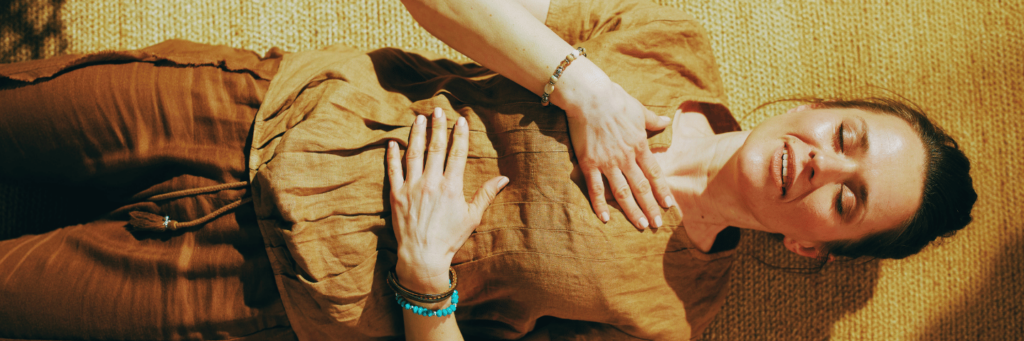

Most of us breathe twenty thousand times a day without noticing.
Yet that single, automatic act is one of the most powerful tools we have for calming the body, quieting the mind, and meeting life with clarity instead of contraction.
When stress and anxiety begin to take hold, your breath is the first thing to change — and it’s also the fastest, most accessible way back to yourself. This guide explores breathwork for stress and anxiety: what it is, how it works, and seven gentle practices you can use anywhere, anytime, to reclaim your calm.
What Is Breathwork for Stress and Anxiety?
Breathwork is the conscious practice of changing the way you breathe to influence your mental, emotional, and physical state. It is at once one of the oldest and one of the most science-backed wellbeing practices in the world.
The roots of breathwork stretch back thousands of years to the yogic tradition of Pranayama — a Sanskrit word meaning the non-restraint of life-force energy. Across cultures and centuries, from yoga and qigong to modern clinical psychology, conscious breathing has been used to soothe the nervous system, sharpen focus, and gently move through fear, grief, and overwhelm.
The beauty of breathwork is its simplicity. You already have everything you need to begin.
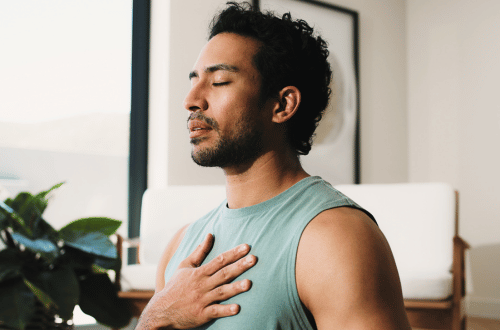
How Breathwork for Stress and Anxiety Actually Works
The reason breathwork is so effective comes down to your nervous system. When you’re stressed or anxious, your body activates the sympathetic nervous system — the fight, flight, or freeze response. Your heart races, your muscles tense, your breath becomes short and shallow, and your brain narrows in on threat.
Conscious, slow breathing reverses this. Deep diaphragmatic breaths stimulate the vagus nerve — the main pathway of the parasympathetic nervous system, often called the rest-and-digest state. According to Cedars-Sinai, activities such as deep breathing, meditation, and gentle movement affect real changes in the brain by increasing vagus nerve activity.
There is also a meaningful shift happening upstairs. Peer-reviewed research published in PubMed Central shows that conscious breathwork increases activity in the prefrontal cortex — the part of your brain responsible for clear thinking, perspective, and emotional regulation. In plain language: breathwork helps you move out of the survival brain and back into the part of you that can actually solve the problem in front of you.
That is why breathwork for stress and anxiety works so well. It is not a distraction. It is biology — gently rerouted with intention.
The Many Faces of Stress and Anxiety
Stress and anxiety wear many costumes. Fear of putting yourself out there. Worry about money. Tension in a relationship. Pressure at work. Anxiety about health, ageing, or the unknown future. Sometimes it shows up as a racing mind at 3 a.m. Sometimes it’s a quiet, persistent tightness in the chest.
Underneath all of these is one common thread: a nervous system that has slipped into alarm mode. And when the nervous system is in alarm, the breath is almost always the first messenger. It becomes shallow, quick, and held high in the chest.
You may not even notice how restrained your breathing has become — because over time, anxious breathing can start to feel normal. If you find your body holding a lot of tension, there is a good chance your breath is part of the picture. The good news? It is also the doorway out.

7 Powerful Breathwork Practices to Calm Stress and Anxiety
Here are seven gentle, accessible breathwork techniques. None require equipment, training, or a quiet room. You can practise them at your desk, on the train, before a difficult conversation, or in bed when sleep won’t come.
1. The One-Breath Reset
Before reaching for any technique, simply take one slow, conscious breath. Inhale fully through your nose. Exhale a little longer than you inhaled. That single breath is often enough to interrupt a spiral and return you to your body.
2. Box Breathing
Used by athletes, performers, and even special forces, box breathing is beautifully simple. Inhale for four counts, hold for four, exhale for four, hold for four. Repeat for one to three minutes. The even, predictable rhythm signals safety to your nervous system.
3. The Extended Exhale (4–7–8)
Inhale gently through your nose for four counts. Hold for seven. Exhale slowly through your mouth for eight. Lengthening the exhale activates the parasympathetic nervous system more strongly than the inhale does, making this one of the most effective breathwork practices for sudden anxiety or panic.
4. Belly Breathing (Diaphragmatic Breath)
Place one hand on your belly and one on your chest. Slowly inhale through your nose so that only the belly hand moves. Exhale gently. This grounds you back in your body and quietly tells the brain you are safe.
5. Ujjayi (Ocean Breath)
Slightly constrict the back of your throat as you breathe in and out through your nose, creating a soft, ocean-like sound. Ujjayi breath is warming, focusing, and especially helpful when anxiety feels scattered or buzzing.
6. Alternate Nostril Breathing (Nadi Shodhana)
Using your right thumb, gently close your right nostril and inhale through the left. Close the left nostril with your ring finger, release the right, and exhale through the right. Inhale through the right, switch, and exhale through the left. This balancing practice from the yoga tradition is wonderful for a busy, racing mind.
7. Coherent Breathing (5–5)
Inhale for five counts, exhale for five counts. Continue for five to ten minutes. This slow, even rhythm gently lifts heart rate variability — a key marker of nervous system resilience and one of the strongest indicators of long-term stress recovery.
When to Use Each Breathwork Practice
Different moments call for different practices. Here’s a quick guide:
- Sudden anxiety or panic — The Extended Exhale (4–7–8) or Belly Breathing
- Before a stressful event — Box Breathing or Coherent Breathing
- A racing, scattered mind — Alternate Nostril Breathing or Ujjayi
- Winding down for sleep — The Extended Exhale or Coherent Breathing
- In a meeting or in public — The One-Breath Reset (no one will even notice)
You don’t need to master all seven. Choose one or two that resonate, and let them become familiar friends.

Building a Daily Breathwork Habit
Like most wellbeing practices, breathwork rewards consistency more than intensity. Five minutes a day will serve you better than thirty minutes once a week.
A few gentle ways to weave breathwork into daily life:
- Practise three slow breaths every time you sit down at your desk
- Pair a breathwork practice with an existing habit — your morning coffee, your evening shower, your commute
- Use it as a transition between activities, especially work and home
- Try a guided breathwork meditation before bed to support sleep
Over time, your nervous system learns the cue. The calm comes faster. Anxiety loses some of its grip.
When Breathwork Alone Isn’t Enough
Breathwork is one of the most powerful tools we have for managing stress and anxiety, but it is not the whole answer. Deep, long-standing patterns of fear or anxiety often benefit from more layered support.
Working with a psychotherapist, counsellor, or trained practitioner can be deeply helpful. Energy psychology approaches such as EFT (Emotional Freedom Techniques) and NLP (Neuro-Linguistic Programming) can also shift fear patterns at a deeper level. If you’d like gentle, ongoing support in your own time, the expert-led courses and meditations inside the Blisspot wellbeing programs are designed to help you build calmer routines around stress, anxiety, and emotional balance — one small practice at a time.
Breathe Deeply, Find Clarity, Reclaim Your Calm
You don’t have to fix yourself. You don’t have to eliminate stress and anxiety from your life. You only need to remember — again and again — that your breath is always with you, ready to bring you home.
The next time stress rises or anxiety begins to whisper, pause. Take one conscious breath. Lengthen the exhale. And let your body remember what it already knows: that you are safe, capable, and resourced. Breathwork for stress and anxiety isn’t a quick fix. It is a quiet, daily yes to your own wellbeing.
Frequently Asked Questions
Q. What is breathwork and how does it work?
A. Breathwork is the conscious practice of changing your breathing pattern to influence your mental, emotional, and physical state. It works by stimulating the vagus nerve, activating the parasympathetic nervous system, and increasing activity in the prefrontal cortex — the part of your brain responsible for clear thinking and emotional regulation.
Q. How quickly can breathwork calm anxiety?
A. Most people notice a shift within 60 to 90 seconds of slow, conscious breathing. With regular practice, the calming effect becomes faster and more reliable because your nervous system learns to recognise the cue.
Q. Which breathwork technique is best for stress and anxiety?
A. The Extended Exhale (4–7–8 breathing) is one of the most effective techniques for acute stress and anxiety because lengthening the exhale activates the parasympathetic nervous system more strongly than the inhale. Box breathing and belly breathing are also excellent choices.
Q. How often should I practise breathwork?
A. A few minutes a day will deliver more benefit than longer, occasional sessions. Pair your practice with an existing daily habit — morning coffee, your commute, or bedtime — to make it stick.
Q. Is breathwork safe for everyone?
A. Most gentle breathwork practices are very safe. If you have a serious cardiovascular condition, are pregnant, or have a history of panic disorder, it’s wise to check with a qualified health professional before starting a regular practice — particularly for more intense breathwork styles.