


True empowerment is not about becoming someone new. It is about coming home to the person you already are — including the parts of yourself you were taught to hide.
We feel whole when we integrate every part of ourselves, even the parts we do not like. Over-eating, drinking, excessive shopping or endless scrolling are all strategies we use to distract ourselves from the very thing we are trying so desperately to escape. The good news? When you stop running, turn around and look squarely at what you have been avoiding, real transformation begins.
What Is True Empowerment, Really?
True empowerment is the quiet, steady state of being at peace with your whole self. It is not force, dominance or relentless positivity. It is the absence of an internal war.
Most of us learn early that some feelings are welcome and others are not. Growing up, well-meaning adults may have told you that your anger, sadness, shame, guilt or forthrightness were not OK. Your confidence and courage may have been read as arrogance or rudeness. Hearing that message often enough, you pushed those feelings deep down and disowned them, believing they were wrong or bad in some way.

That disowning is the moment true empowerment slips out of reach. You did not lose your power. You simply filed part of it away where you could not find it.
Why Suppressing Emotions Keeps You Stuck
Pushing feelings down does not make them disappear — it makes them louder. Research on emotion regulation found that people who habitually suppress emotional expression experience more negative emotion and lower wellbeing than those who work with their feelings instead (Gross & John, 2003).
Resisting or denying what we do not like only keeps it in place, and we end up constantly dealing with the exact thing we are trying to avoid. Before you can address a drinking problem, you have to admit there is one. Denial keeps you stuck with the same problem, year after year.
Signs You Have Disconnected From Your Empowered Self
You may have drifted from true empowerment if you notice:
- Persistently low energy
- Low mood or depression
- Anxiety or panic attacks
- Simmering resentment
- Not feeling like yourself
- A sense of isolation, even around others
- A life that is not working the way you would like
- General unhappiness or discontent
None of these are failures. Each one is a signpost pointing you back towards true empowerment.
Acceptance: The First Step Towards True Empowerment
Acceptance is the doorway. Not approval, not resignation — simply an honest willingness to see what is there.
This is where self-compassion does its quiet work. A meta-analysis of 20 samples found a large inverse relationship between self-compassion and psychological distress such as depression and anxiety (MacBeth & Gumley, 2012). Being kind to the parts of you that you have judged is not indulgent. It is clinically meaningful.
When you begin to explore the deep, dark corners of yourself, you step back into your own authority. Nothing has to be fixed first. You only have to stop fighting.
In practice, acceptance often sounds unremarkable. It is noticing envy at a friend’s good news and saying that’s envy instead of sinking into a spiral of jealousy. It is admitting you are exhausted rather than proving you are fine. Each small admission returns a little energy that was previously spent on the pretending.
Your Triggers Are Clues to True Empowerment
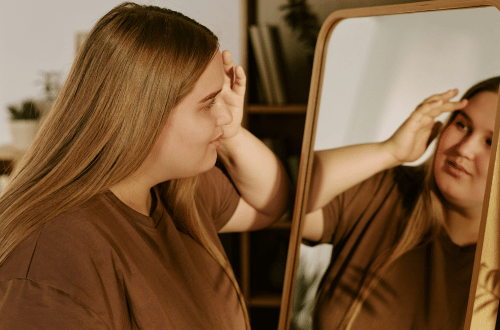
When someone else’s behaviour “triggers” you, it is usually pointing at something you have disowned in yourself. Triggers are clues. Uncomfortable feelings and sharp judgements are often gifts in strange wrapping paper.
Next time you are triggered, pause and ask: what is this showing me about a part of myself I have refused to look at? Unwrapping that gift is how disowned parts come home, and how your power stops being a concept and becomes an experience.
Every Disowned Part Has an Opposite
The parts of yourself you have pushed away all carry a twin. Accept one and you inherit the other.
| What you disowned | At the Other Side |
|---|---|
| Anger | Calm |
| Guilt | Innocence |
| Shame | Courage |
| Sadness | Happiness |
| Fear | Trust |
When you accept your anger, you also integrate calm. When you stop battling an emotion, the inner pressure, heaviness and low energy begin to soften into peace. That outspoken, forthright part of you, viewed with love, becomes the courage to speak your truth. Seen this way, true empowerment is less a goal to chase than a reunion.
Learning to value every part of yourself is closely tied to how you define your self-worth — the two grow together.
True Empowerment for Women
Women are often praised for being accommodating and criticised for being direct. Many of us learned to shrink our anger into patience, our ambition into helpfulness, and our needs into someone else’s needs. Choosing yourself is not a betrayal of the people you love — it is the only sustainable way to keep showing up for them. Yet so many women struggle to put themselves first.
For many of us, women empowerment books can offer that same reminder — that investing in ourselves, recognizing our strengths, and taking responsibility for our future are not acts of selfishness.
Whether the reminder arrives through a book, a conversation or a quiet morning practice, the work is the same: reclaim what you disowned. That is where true empowerment for women begins, and it rarely looks dramatic from the outside.

Seven Practices to Build True Empowerment Every Day
- Name the feeling. Say it plainly — “I feel angry” — without adding a story or a justification.
- Track your triggers. Keep a short note of what irritates you in others this week. Patterns appear fast.
- Find the opposite. For each disowned trait, identify the strength living on its other side.
- Speak one honest sentence a day. Small truths build the muscle for bigger ones.
- Drop the distraction. Notice the reach for the wine, the trolley or the remote, and sit still for sixty seconds instead.
- Practise self-kindness out loud. Speak to yourself the way you would to a close friend.
- Meditate briefly and often. Even five minutes builds the tolerance this inner work asks of you.
None of these require a retreat, a life overhaul or a new personality. They require honesty, repeated.
As Within, So Without
As you become at one with the parts of yourself you previously disliked, you will find yourself reacting less. Another person’s aggression stops pulling you out of your peace, because you have made peace with your own. Their judgment lands softly, because you have stopped judging that trait in yourself.
This is the real measure of true empowerment: not that difficult people disappear from your life, but that they lose their grip on your inner state. Confidence follows naturally — and if you want to strengthen that side of things, these reasons you need more confidence are a good next read.
The journey to love, happiness and freedom begins with the self. It transforms your life from the inside out. When you feel loving and peaceful within, that is what you will observe and experience in your everyday life.
Frequently Asked Questions
What is true empowerment?
True empowerment is the state of being whole — accepting and integrating every part of yourself, including the emotions and traits you were taught to disown, so you no longer live in conflict with your own nature.
How is empowerment different from confidence?
Confidence is how capable you feel in a given situation. Empowerment is deeper and steadier: it is your relationship with yourself, and it holds even when a situation goes badly.
How long does it take to feel empowered?
Most people notice a shift within weeks of working honestly with their triggers, though integration is ongoing. Reactivity usually drops before anything else changes.
Can you feel empowered and still feel afraid?
Yes. Fear is not the opposite of empowerment — avoidance is. Feeling afraid and choosing to act anyway is exactly what integration looks like in practice.
Your Next Step
You do not need to become a different person to feel powerful. You need to stop exiling the parts of yourself that were always yours. To go deeper, explore the Bliss Every Day eCourse — a practical toolkit for building confidence, self-esteem and lasting true empowerment.