
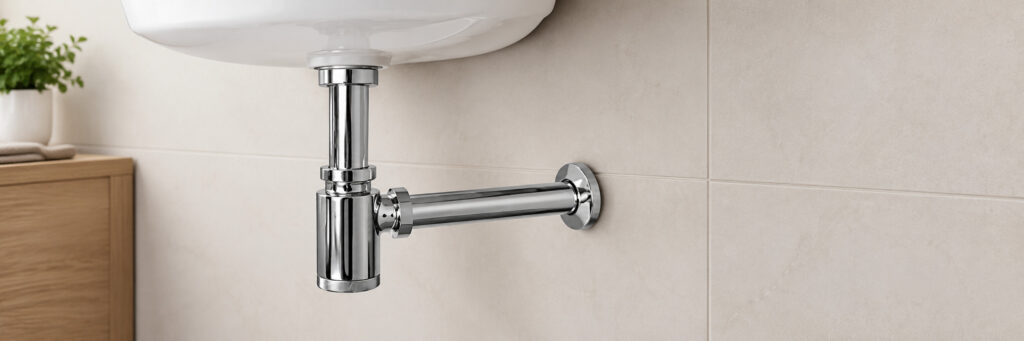

A bottle trap for basin is a curved plumbing device that is installed beneath it. It contains a certain volume of water in its curved body. The water acts as a seal, preventing the gases present in the sewer from escaping upwards. The bottle trap connects the waste outlet of the washbasin with the wall drainpipe via a waste coupling and a connecting pipe. Without it, every basin would let foul odours and pests straight into your bathroom.
Key Takeaways
- The bathroom bottle trap is located under the washbasin, and it contains a fixed water seal.
- The seal prevents any gas, smell, and pests from entering the bathroom.
- It connects to the basin via a waste coupling and then to the wall drain.
- Almost all Indian wash basins have an outlet of 32 mm, which is the standard bottle trap outlet size.
- Plumbing codes suggest that there should be a minimum height of the water seal, usually 25 mm.
- A bottle trap is easy to clean compared to a P-trap because the bottom cap can be removed manually.
- Rigid bottle traps perform better than flexible corrugated pipes, as they accumulate hair and dirt easily.
- Continuous use ensures that the seal is replenished constantly. An empty trap is the main cause of odors in the bathroom.
- JAL Bath Fittings offers ready fittings such as the Elegant 32mm and Legend bottle traps.
- Proper sizing and finish ensure that the exposed plumbing appears neat under any basin.
What Is a Bottle Trap for a Basin?
A bottle trap for basin use is a compact plumbing part shaped like a small bottle. The basin bottle trap is positioned right below the basin, replacing the bulky S-trap system. The water is always retained inside its curved body after every washing activity. The trapped water acts as a barrier to prevent any foul smell from reaching your bathroom from the sewer line. Because of its round housing, plumbers often just call it a bathroom bottle trap or basin bottle trap.
1) Usually manufactured out of either brass or chrome.
2) The design is compact, making it ideal for basins that have little space under them.
3) Widely used in Indian bathrooms where the plumbing remains visible under the basin.
How Does a Bottle Trap Actually Work?
The bottle trap assembly is very easy to understand. The waste liquid enters the trap through the outlet of the basin into the trap chamber. There is some amount of water left after each use. This water creates a tight seal at the bottom of the trap. The sewer gases cannot rise above this seal and hence remain below it, away from your bathroom atmosphere. Hair, soap flakes, and small debris also settle in this chamber, rather than travelling further down the pipe.
How Does a Bottle Trap Connect to a Basin?
Connecting a bottle trap for basin plumbing follows a short, defined chain of parts. Knowing this chain helps during installation and during troubleshooting.
1) Basin waste outlet: The opening in the lower part of the basin where the water flows out.
2) Waste coupling: Used to connect the basin outlet with the trap; there is a rubber washer to prevent leakage.
3) Trap inlet: The bottle trap’s upper opening is screwed to the waste coupling.
4) Trap body: Water stays in the trap body to make a seal. The base cap can be removed for cleaning.
5) Extension pipe: The extension pipe discharges water coming out of the trap outlet to the wall.
6) Wall flange: Links the pipe to the wall drainage point and hides the final joint.
Alignment is key for each component. Bad alignment will stress the joint and lead to leaks. The typical basin requires the entire assembly to fit into a few inches of space beneath the bowl.
Why Does Every Wash Basin Need a Bottle Trap?
1) Odour prevention: Prevents the smell of sewer gas from filling your bathroom.
2) Hygiene: Prevents the spread of bacteria and other gases back up through the basin.
3) Insect prevention: Besides keeping odour out, the water seal also keeps out small insects.
4) Clog prevention: Traps hair and other soap residues from entering the drainpipe.
5) Aesthetic purpose: Conceals all the plumbing connections in one neat chrome connection.
6) Compliance with code regulations: Most plumbing codes mandate that every basin have a trap.
Bottle Trap vs P-Trap vs S-Trap: What’s the Difference?
|
Trap Type |
Outlet Direction |
Best Suited For |
Maintenance |
|
Bottle Trap |
Wall outlet |
Countertop and wall-hung basins, exposed plumbing |
Bottom cap unscrews by hand |
|
P-Trap |
Wall outlet |
Basins where the trap stays hidden or concealed |
Needs a wrench and more effort |
|
S-Trap |
Floor outlet |
Older installations with a vertical drainage route |
Harder to access and clean |
Don’t pick a trap by looks alone. Check the outlet direction, available space, and whether the plumbing stays exposed or concealed.
Bottle Trap or Flexible Waste Pipe: Which Should You Choose?
While some people prefer the corrugated pipe to the bottle trap fitting, this usually does not work to their advantage.
1) The corrugated flexible pipe has grooves that trap hair and other materials in their folds.
2) As a result, it is difficult to clean and more likely to develop obstructions.
3) On the other hand, a rigid bottle trap has a smooth inner surface, which decreases the risk of developing obstructions.
4) Chrome-plated bottle traps also tend to be more aesthetically pleasing than the corrugated pipe.
For anyone renovating a bathroom, a proper bottle trap for basin plumbing is the safer long-term choice.
How Do You Maintain a Bottle Trap?
Cleaning the basin bottle trap is easy and can be done by most homeowners without difficulty.
1) Put a small bucket under the basin trap prior to cleaning.
2) Undo the bottom cap manually to remove the retained water.
3) Clean the sludge or hair that might have gathered inside.
4) Fix the cap firmly so as to get back to a water-tight condition.
5) Allow water to flow from the taps for a few seconds if the basin has not been used for quite some time.
That last step matters more than people realise. A trap left dry for weeks loses its water seal, letting smells return until you refill it.
What Are the Warning Signs of a Failing Bottle Trap?
- A persistent bad smell near the basin, even after cleaning.
- Slow or gurgling drainage when you empty the basin.
- Visible water stains or drips on the cabinet floor below.
- Corrosion or discolouration on an older metal trap body.
- A loose or wobbly joint where the trap meets the wall pipe.
Any of these signs mean it’s worth inspecting or replacing the trap before the problem grows.
Which JAL Bottle Trap Suits Your Basin?
JAL Bath Fittings makes bottle traps built to fit standard Indian basin outlets. The Bottle Trap ‘Elegant’ 32 mm suits most countertop and wall-hung basins, with variants that include a 12-inch pipe for longer wall distances. For a heavier fitting with a distinct profile, the Bottle Trap ‘Legend’ offers the same functional seal in a different design. Explore the full Bottle Trap range from JAL Bath Fittings to match a fitting to your basin’s outlet and wall position.
Conclusion
The bottle trap may seem like a small fixture, but it is responsible for the hygiene of your bathroom on a daily basis. Proper installation, from the waste coupling to the wall pipe, ensures that there will be no odours or blockages for many years to come. Are you planning to install or replace a basin? Check out our extensive range of bottle traps at JAL Bath Fittings.